Introduction: A Comparative Case for Upgrade
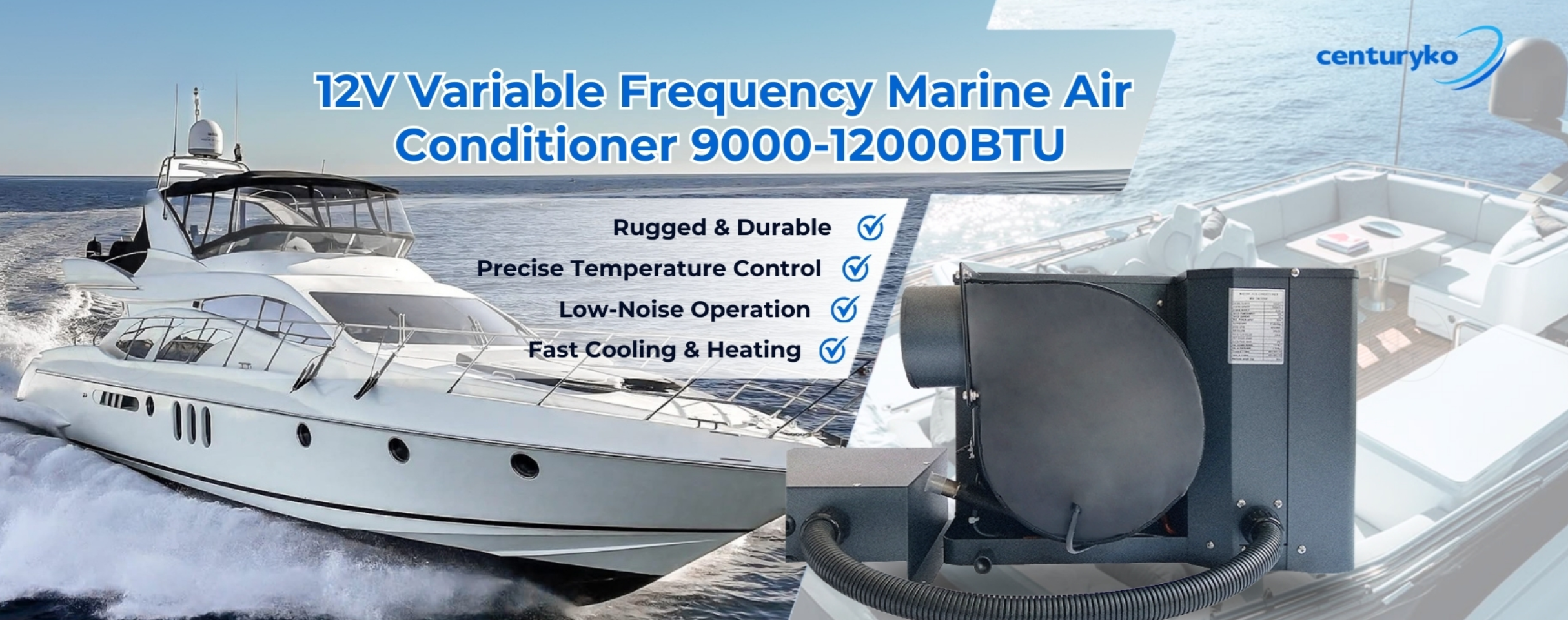
Marine operators face a clear operational choice: keep relying on legacy chillers that hobble endurance and crew welfare, or adopt compact, efficient units that reduce downtime and operating expense. The argument favors change. Early adopters prioritize a small air conditioner for boat not as a luxury but as mission-critical equipment that aligns comfort, safety, and fiscal prudence. NOAA’s documentation of rising sea surface temperatures over the past decade serves as a real-world anchor—higher ambient loads increase cooling demand across fleets, and that demand exposes weaknesses in older HVAC gear.
Comparative Insight: Old Chillers Versus Next-Gen Units
Legacy marine HVAC systems tend to be bulky, maintenance-heavy, and tuned for a different climate era. They rely on large compressors, heavy condensers, and multi-point ducting that complicate retrofits. Next-generation small boat air conditioning systems swap volume for smarter components: compact compressors, variable-speed drives, improved evaporator design, and electronic controls. The result is a clearer metric: fleets trade mass and fuel penalty for a lighter footprint and steadier performance under load. Operationally, that means fewer emergency repairs and more predictable shore-power cycles.
Operational Benefits That Drive Fleet Decisions
Decision-makers measure outcomes in hours at sea, fuel consumption, and crew retention. Modern units deliver measurable advantages in each category. Reduced compressor cycling preserves engine hours. Better heat-exchanger design lowers energy draw during peak days. Integrated diagnostics shrink troubleshooting time. Those are not abstract improvements; they convert to fewer mission aborts and lower maintenance budgets. In practical terms, upgrading systems reduces thermal stress on electronics and personnel during prolonged warm-season operations, which sustains both safety and productivity.
Integration Realities: Retrofit, Controls, and Power
Successful retrofits hinge on three technical points: physical fit, electrical compatibility, and control integration. Small units are designed for constrained bilge or locker spaces, but installers still must confirm breaker capacity and shore power interactions. Modern controllers offer networked monitoring that feeds fleet management software—allowing central visibility of fault codes and run-hours. Pay attention to refrigerant choices and service access when selecting models; easier access saves shop labor later. These are concrete engineering checks, not optional features.
Common Mistakes to Avoid — Practical Lessons
Operators often assume lower initial cost justifies keeping older units, and that creates a hidden bill: increased fuel use, higher downtime, and unpredictable maintenance windows. Another recurring error is mismatching BTU capacity to enclosed volume—oversizing cycles humidity; undersizing strains compressors. Finally, poor filter and condensate routing design invites corrosion and biological fouling. These oversights amplify over a season—repair costs climb and crew morale dips. —A small, well-specified unit typically repays the difference within a few operational cycles.
Case Considerations and Comparative Alternatives
When comparing brands and models, weigh lifecycle cost, parts availability, and field service networks. Alternatives range from split systems that place condensers on deck to self-contained units suited for cabin retrofits. Evaluate sound levels, refrigerant type, and modularity for fleet-scale standardization. The goal is consistent spare-part inventories and predictable maintenance protocols, not a patchwork of incompatible systems. For fleets operating in warmer latitudes, prioritize units with higher evaporator efficiency and corrosion-resistant components.
Advisory: Three Metrics to Guide Procurement
1) Seasonal energy efficiency and real operating draw: benchmark amps under realistic ambient conditions, not just lab specs. 2) Mean time between failures (MTBF) and serviceability: prefer designs with accessible compressors and documented failure modes. 3) Integration footprint: confirm physical envelope, shore-power wiring, and control-network compatibility before purchase. These three golden rules narrow choices decisively and protect operating budgets.
Upgrading fleet HVAC is an operational imperative that yields tangible returns in uptime, safety, and total cost of ownership. —A final thought: smarter, smaller air conditioning systems give crews the reliable environment they need to perform, and fleets the predictability they require. ZhuoliMarine