Framing the comparison
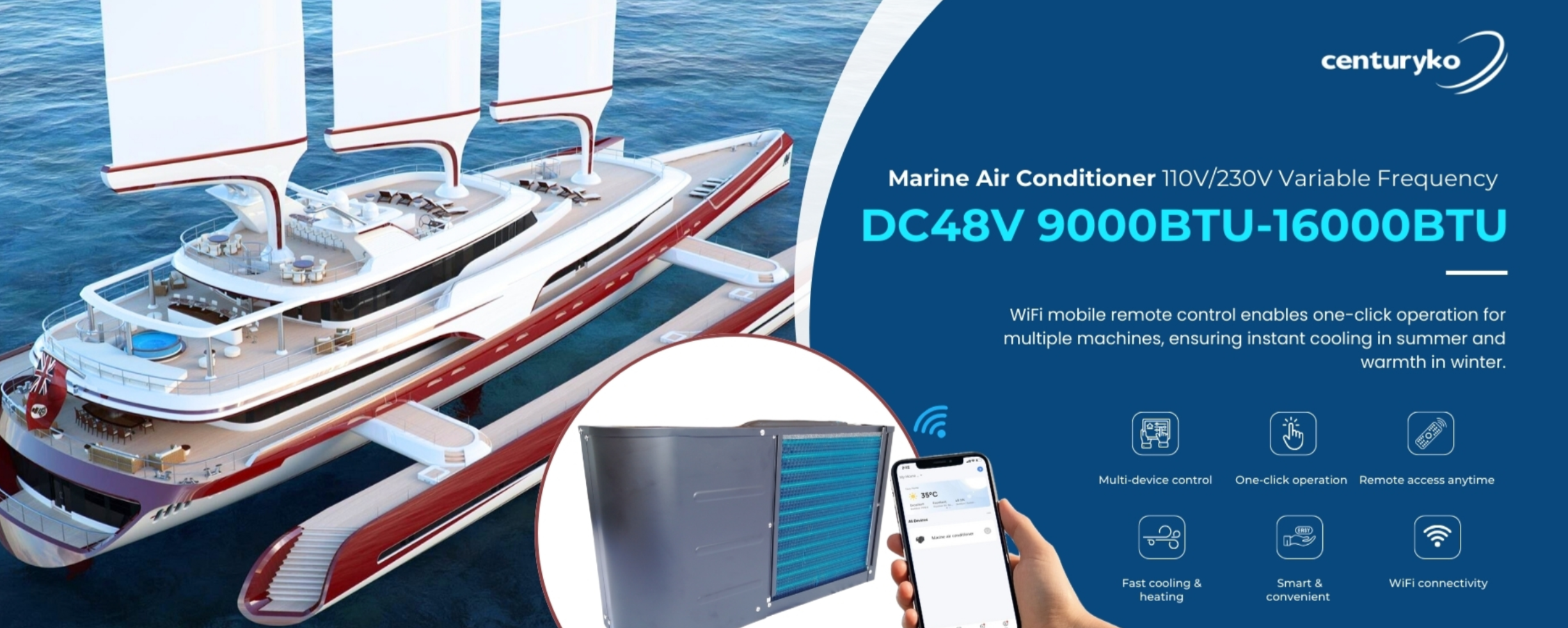
This comparative insight examines how modern smart multi-zone climate controls differ from conventional yacht air conditioning, with emphasis on control strategy, installation footprint, and operational outcomes. Owners and shipyards now evaluate a yacht air conditioner not only by cooling capacity but by how it integrates with on-board automation and power budgets. The goal here is a clear, practical contrast so decision makers may choose the appropriate system for their vessel and cruising profile.
Design and control differences
Conventional systems typically rely on single-point thermostats and a central compressor feeding simple ducting. Smart multi-zone setups distribute smaller compressors or use inverter-driven compressors with dedicated thermostats for each cabin, enabling tailored temperature and humidity control. The multi-zone arrangement reduces unnecessary cycling and can improve comfort while lowering parasitic load on generators. Key marine terms: compressor, inverter, heat exchanger. These technical shifts affect layout, control electronics, and wiring—important considerations during refit or new-build.
Performance at sea — real-world anchor
Performance under load is decisive. In warm, humid waters such as the Mediterranean, and at showcases like the Monaco Yacht Show where contemporary vessels demonstrate integrated systems, multi-zone automation shows tangible advantages in guest comfort and energy use. Properly tuned zones keep saloon and cabins at different setpoints without overcooling communal areas, and inverter modulation reduces start-stop stress on the compressor and shore-power draw. Expect measurable differences in runtime hours and steadier cabin humidity control, but note that gains depend on correct zoning, duct sizing, and a well-matched heat exchanger.
Common mistakes and viable alternatives
Frequent errors include oversizing capacity, neglecting ducting losses, and choosing controls that do not support remote diagnostics. Owners sometimes assume a larger compressor equals better comfort; instead, it causes short cycles and higher maintenance. Alternatives worth considering are modular split systems and compact marine chillers with intelligent PLC controls; each has trade-offs in footprint, serviceability, and initial cost. For many sailboats, properly spec’d air conditioners for sailboats that balance BTU capacity and inverter efficiency will outperform oversized, unmanaged equipment. —This is especially true when deck space and access for maintenance are constrained.
Advisory — three golden rules to evaluate systems
1. Match control architecture to use case: insist on true multi-zone thermostats and an inverter-capable compressor if guest comfort and energy savings are priorities. 2. Prioritize installed efficiency metrics over nominal capacity: review BTU/kW figures, compressor duty cycle, and heat exchanger sizing rather than raw tonnage. 3. Confirm marine-grade serviceability: specify corrosion-resistant materials, local spare-part pathways, and service access for the compressor and heat exchanger. These three metrics—control, efficiency, and serviceability—form the core checklist for professionals selecting an HVAC path. —A clear specification at procurement reduces costly refit changes.
Closing guidance
Adopt systems that are measured by operational outcomes: lower runtime, stable cabin setpoints, and straightforward maintenance. For those specifying or refitting systems, the best results come from balancing multi-zone control, inverter efficiency, and marine-grade hardware; this balance is precisely the practical value that ZhuoliMarine brings to modern yachting.