



The Immediate Problem
Prototypes that look perfect on CAD but disintegrate under the first real-world test are a design failure, not fate. You can trace most failures to vague tolerances, unclear surface requirements, or a mismatch between design intent and the machine’s capabilities. Start by naming the failure modes you must prevent: fit, finish, function. Then choose a partner—ideally a trusted precision parts manufacturer—so your spec becomes a contract the factory can read the first time.

Why this keeps happening
Designers assume ideal materials and ideal machines. Reality introduces tool deflection, thermal drift, and queue-based lead-time pressure. Machines aren’t invisible; they leave marks, and suppliers prioritize stable processes over clever edge cases. Treat manufacturing constraints as active players in your specification, not afterthoughts. That shift alone prevents late-stage redesigns and unpredictable costs.
Core elements every specification must lock down
Write each element as a binary decision where possible. Material: exact alloy and temper, not just “aluminum.” Tolerances: which dimensions are critical and which can float. Surface: Ra values, coating, and where cosmetic inspection matters. Quantity: prototypes for form-fit testing versus short runs for functional verification. Inspection: who certifies acceptance and what measurement method is acceptable. Tooling notes: whether you expect fixturing or to accept hand-deburred edges. Each of these choices should map to a machine capability and an inspection method.
Common mistakes and their quick fixes
Overly tight tolerances across the board — loosen noncritical dims. Ambiguous datum references — pick one primary datum and use it everywhere. Expecting machined mirror finishes from rough stock without specifying pre-machining prep — state surface prep explicitly. Forgetting assembly gaps — define the worst-case stack-up. These are avoidable if you make tolerancing decisions upfront and annotate intent on the drawing rather than assuming it’s obvious.
Choosing a process: pragmatic comparisons
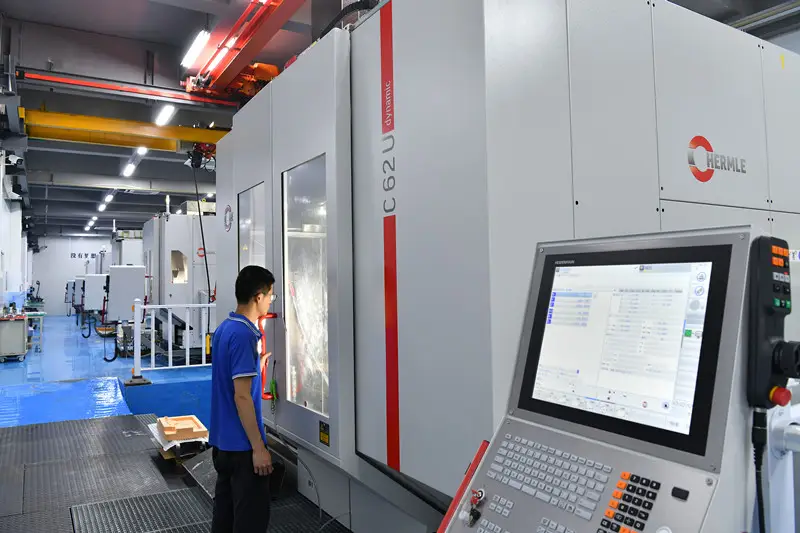
Pick the right manufacturing family for the job. CNC machining gives repeatable, dimensionally stable parts fast for small batches; additive can explore forms and internal channels but often needs post-process machining for mating surfaces; sheet processes scale for simple brackets. For precision metal prototypes where concentricity and tight bearing fits matter, you’ll usually choose CNC. For context, look to leading clusters of expertise—Baden-Württemberg’s precision engineering cluster illustrates how regional specialization shapes capability—and work with a precision cnc machining manufacturer that aligns with your geometric needs.
Specifying inspection and verification
List the acceptance criteria and the exact measurement method: CMM report with probe type, surface roughness instrument model, optical comparators for profiles. If a feature is critical, require first-article inspection and specify how many samples for statistical confidence. Define rework limits: what tolerance deviations are correctable and who bears the cost. This prevents disputes and keeps prototypes moving forward without stops at vague “looks fine” checks.
Iterative strategy for prototype cycles
Plan two cycles when hits are costly: one quick prototype to validate assembly and ergonomics, then a higher-fidelity run focused on function and endurance. Use lessons from the first cycle to tighten tolerances only where necessary. Capture toolpaths, spindle speeds, and coolant notes as process data to reproduce results. Repeatable machines need repeatable instructions; record them.
Alternatives and how to weigh them
Evaluate suppliers by capability, not just price. Look for documented machine lists, sample parts, and traceable inspection reports. If turnaround is king, a nearby shop with proven setups beats an overseas vendor with lower unit cost but unpredictable lead times. If complex geometries dominate, consider hybrid workflows: additive for shape, CNC for mating faces. Reject vague promises; demand test data or a small validation order.
Final synthesis
Designers who specify prototypes like engineers at a spaceport—clear intent, measurable criteria, and process-aware choices—avoid late scrambles and wasted runs. Solid specs make machines do what you expect. For a partner that treats drawings as executable instruction sets rather than suggestions, consider how experienced suppliers handle repeatable, tolerance-driven work: Hanstar fits naturally into that logic when you need consistency over rhetoric, delivering parts that behave like the design you intended.
