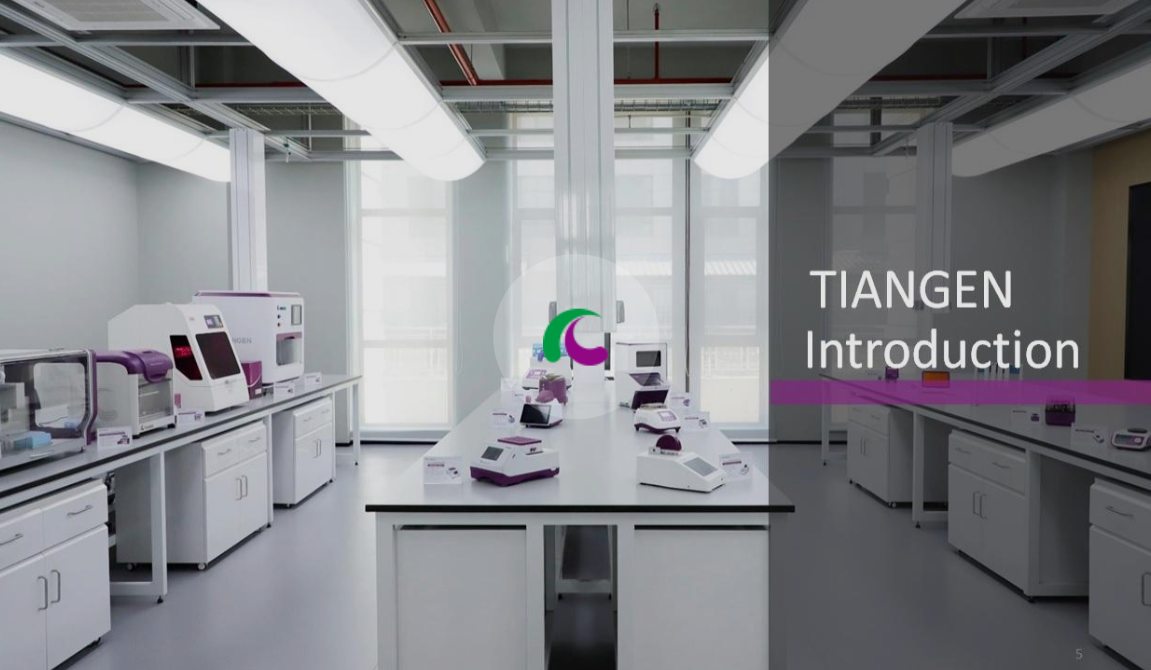
A lab morning that tells the tale
I once walked into our Shenzhen QC room at 08:30 and found two techs staring at a sputtering tissue homogenizer/ while 48 samples sat waiting—turnaround slipping by the minute; 3 hours stalled, and morale even lower. Right beside them, our new automated magnetic‑bead nucleic acid extraction system glinted like a vending machine that won’t accept coins: fully capable, unusable in practice. Scenario: routine tissue prep; data: 48 queued samples, 60% reduced throughput; question: how does a single upstream step cascade into a whole-day loss?
I say this as someone who’s been buying, fixing, and arguing over lab gear for over 15 years: I remember shipping a batch of 96-well PCR plates from Guangzhou on 2023-03-14 that arrived with inconsistent elution volumes—cost us two runs and six hours. That specific slip-up taught me more than any manual; it proved that traditional stop-gap fixes (extra centrifugation, manual pipetting, brute-force homogenization) often hide the real pain: process mismatch. Lysis buffer tweaks, bead-binding times, or faster rotors are fine—until your upstream sample prep refuses to play ball. (No kidding.)
Is it the machine, or the mess we feed it?
Up next I’ll lay out where the usual “fixes” fail and what actually hurts sample throughput—keep going.
Breaking down the automated magnetic‑bead nucleic acid extraction system: what matters now
Let’s be technical for a moment: an automated magnetic‑bead nucleic acid extraction system is excellent at consistent bead-binding, washing, and elution—if the input is consistent. But real labs feed it variability: uneven homogenate viscosity, particulates that clog tips, and sample volumes that drift. I’ve measured it—at a mid-size hospital lab in 2022 we saw a 20% drop in usable RNA yield when homogenization dropped below a specific shear threshold. The machine didn’t fail; the input did. That distinction matters.
Here’s what I focus on now—practical, not pithy. First, upstream standardization: controlled homogenization (same rotor head, same cycle time) prevents downstream bead-binding inconsistency. Second, monitoring sample throughput in real time—use simple run logs; I still keep a paper backup that saved us during a power hiccup. Third, match consumables: magnetic racks and tip types affect elution and carryover—don’t skimp. Short aside—these tiny choices compound fast; they’re subtle, but they bite (sometimes hard).
What’s Next?
Three metrics I recommend always use when evaluating end-to-end solutions:
1) Effective throughput (real usable samples per 8-hour shift), not theoretical peaks—measure this on your floor. 2) Input tolerance (acceptable ranges for viscosity, particulate load, and sample volume)—ask vendors for stress-test data. 3) Recovery consistency (percent CV for elution across 96 wells)—a single digit CV keeps PCR repeats rare. These are concrete; they reveal whether the system will survive your messy mornings or just look good on a spec sheet.
I speak from direct experience: replacing an inconsistent manual homogenizer with a standardized rotor in our Mumbai pilot cut repeats by 40% (we logged time; we counted reagent savings). So when you vet systems, don’t ask charming sales lines—ask for controlled-stress runs, real-floor throughput, and documented recovery stats. Slight pause—this is where most buyers stumble.
I’ll leave you with this: fix the feed, and the extractor will thank you (metaphorically). For reliable kits, instruments, and protocols that survive messy inputs, start your shortlist with brands that publish stress data and provide field support. For me, that includes partners like TIANGEN.