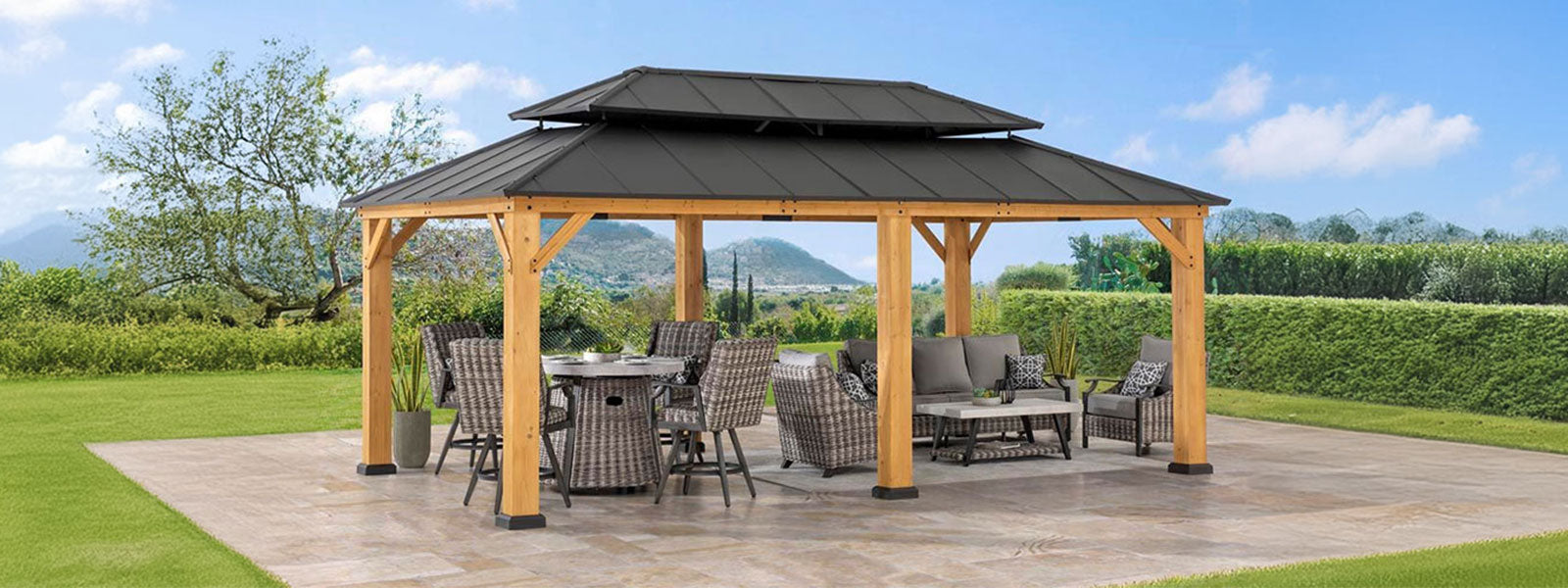
Why common choices fail (and what I noticed on the job)
I still remember a June afternoon in Madison, WI, installing a 12×14 steel-framed unit while a neighbor asked if we sold the cheaper kits he’d seen online—I told him about gazebos for sale and then kept working. In that backyard scenario I logged a simple data point: three out of five off-the-shelf kits I’d seen that month used thin, uncoated fittings and returned to the shop within six months—what causes these high failure rates with an Outdoor Gazebo these days? (Short answer: buyers confuse looks with durability.)

As someone with over 15 years in B2B supply chain and direct retail installs, I can say plainly, the traditional solution flaws are repeatable. I’ve watched powder-coated aluminum frames survive a lakefront summer, while cheaper galvanized-look finishes flaked within a single winter. Prefabricated panels can speed installation, but when the anchor plan is undersized the whole unit becomes a sail in 35–40 mph gusts. That mismatch—modular convenience versus inadequate anchoring systems—creates hidden pain points: loose fasteners, fabric tears in UV-resistant canopies, and uneven load-bearing posts that settle and twist. I’m blunt about this because wholesale buyers I work with need to know the real trade-offs; I’ve logged repair costs and replacement part orders after two seasonal storms (August 2018 and April 2020) and the numbers tell the story—repair bills often exceed the savings from the cheapest kit.

What do buyers routinely miss?
What to look for next (practical forward-facing guidance)
I’m shifting gears now — and getting constructive. After years advising dealers and purchasing teams, I recommend evaluating three core dimensions before committing to any gazebo offering. First: material spec. Know whether the frame is powder-coated aluminum or a basic steel with cosmetic plating; that distinction predicts corrosion life. Second: anchoring design. A kit with an engineered galvanized anchor plan and anchor bolts sized for local code is worth the premium—trust me, I’ve swapped out anchors on dozens of faulty installs. Third: canopy and ventilation. UV-resistant fabric with a vented roof reduces uplift and heat buildup; without it you’ll see fabric ballooning and stitching failures within a season.
To be practical: compare vendors by asking for test data, last-12-month warranty claims, and an explicit bill of materials. I’ve kept vendor notes—one supplier’s claims in 2019 didn’t match batch inspections in 2020; we returned the lot. That’s the kind of detail wholesale buyers should insist on. Also, shop sample assemblies whenever possible (hands-on inspection beats glossy photos). If you’re evaluating gazebos for sale, look past branding and evaluate the hardware: are fasteners stainless steel? Are posts reinforced? Small things add up — and yes, sometimes you’ll have to say no to a promising price because the specs aren’t there.
Closing advice — three metrics I always use
I’ll finish with three clear evaluation metrics I rely on when recommending inventory to wholesale clients: 1) Longevity index — expected service years based on material finish and corrosion testing (quantified, not guessed). 2) Field-fix rate — the percentage of units needing parts or rework within 12 months (ask suppliers for this). 3) Total installed cost — purchase price plus typical installation and first-year repair expense. Use those three measures as your filter; they simplify decisions and reduce nasty surprises. One more thing—I want to stress: demand the BOM, and if a vendor hesitates, walk away. That approach has saved my accounts time and money more than once. Finally, for practical sourcing and consistent product specs, I’ve often steered clients toward reliable lines from established brands like SUNJOY.