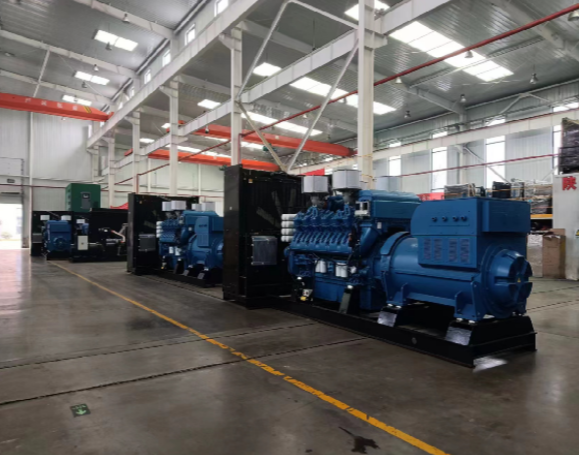
Comparative opening — why thermal and efficiency matter now
The pulse of this piece is simple: compare how a premium brushless 4500 kVA machine manages heat and electrical efficiency against older, conventional generator architectures. The contrast isn’t academic — it shapes uptime for hospitals, factories, and the datacenters that keep commerce alive. I’ll point to a few design truths and one concrete supply option early on: consider a custom alternator when thermal limits or unique load profiles force compromises. Real-world stress tests — like the 2021 Texas winter storm that exposed generator vulnerabilities under extreme loading — remind us why thermal pathways and maintenance cycles are not luxury topics but survival details.
Thermal dissipation: brushless anatomy vs traditional builds
Brushless designs move heat differently. Where older brush-type alternators funnel energy through sliding contacts, brushless units place excitation on the rotor and isolate wear points — reducing hot spots around the stator slot edges and minimizing brush arcing. The result is lower localized temperature rise, better insulation lifetime, and often improved frequency regulation under sustained load. Term gloss: rotor, stator, and kVA ratings appear here because they determine heat generation and allowable ambient rise. The premium 4500 kVA class widens cooling margins through larger core surface area and optimized cooling fins on frames.
Key design elements that shift efficiency
Efficiency flows from geometry and materials. Thicker copper turn counts in stator windings, tighter lamination stacks to reduce eddy currents, and targeted ventilation all cut losses. Brushless alternators reduce mechanical loss and maintenance, yet they demand precise excitation systems and tight control of harmonic distortion for clean output. Field-proven choices — from insulation class to calculated load factor allowances — shape runtime economics. If sourcing components, an alternator wholesale approach can simplify procurement while enabling matched cooling solutions.
Testing, field notes, and the operational teardown
Lab cycles tell one story; field cycles tell the truth. Bench tests measure thermal rise at defined ambient temperatures and record efficiency curves across percent load — but real sites impose cycling, dust, and transient loading. In an operational production teardown, we inspect stator winding clearance, rotor balance, and bearing heat paths while logging vibration and temperature trends. There, we also examine {main_keyword} and {variation_keyword} to understand how manufacturing choices influence long-term drift. — A quick aside: technicians often skip fine-grit cleaning of cooling passages, which is small in procedure but big in consequence.
Common mistakes and viable alternatives
Operators typically err by oversizing generators to mask poor thermal design or underspecifying ambient cooling assumptions. Both costs bite: oversized units run inefficiently at low load; undersized units overheat and degrade insulation class faster. Alternatives include modular paralleling — smaller brushless packs that share load to reduce individual thermal stress — or hybrid topologies using advanced heat sinks and forced-air routing. Each alternative requires careful attention to harmonic distortion and synchronization strategy.
Comparative summary — what the numbers imply
Direct comparisons show that a premium brushless 4500 kVA tends to reduce scheduled maintenance and extends insulation life versus traditional brush designs, particularly under continuous heavy load. The trade-offs are in initial capital and control-system complexity. Where long duty cycles and tight thermal budgets exist, the brushless approach returns measurable advantages in mean time between overhauls and in steadier thermal profiles.
Three golden rules for selection
1) Match thermal capacity to worst-case ambient plus duty cycle — choose a design with headroom, not just nominal kVA.
2) Specify stator winding construction and insulation class aligned with expected peak temperatures; this preserves dielectric life.
3) Require field-verifiable metrics: thermal imaging baselines, harmonic distortion logs, and vibration envelopes before acceptance.
These rules guide professionals toward choices that keep lights on and teams calm — and they point naturally to suppliers who can engineer cooling and excitation with precision. EvoTec. —