



Introduction
Have you ever paused in a busy factory and wondered who’s actually breathing the air we call “safe”?
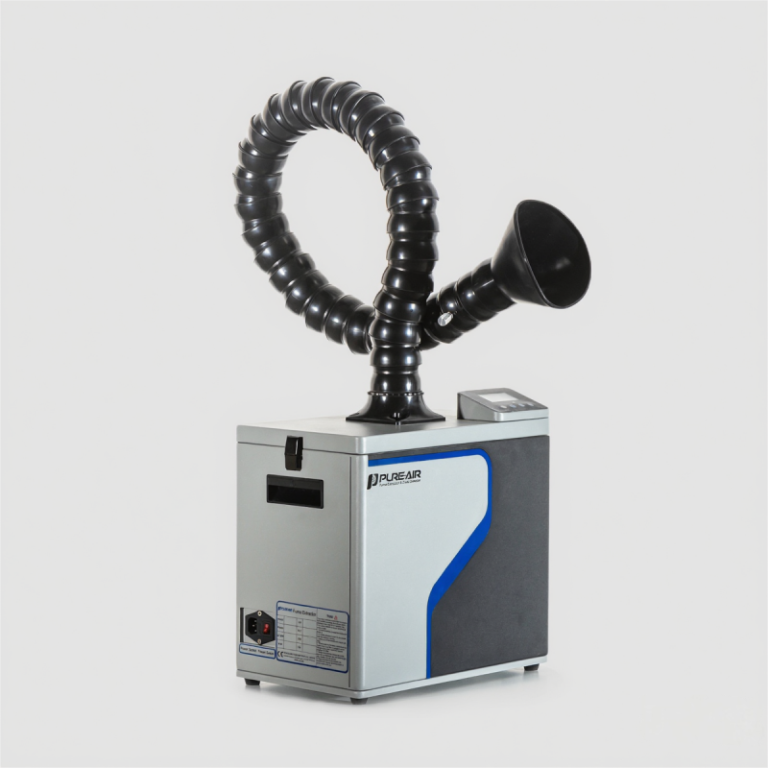
When I look at fume extraction for electronics and industrial applications, I see a mix of data and assumptions: studies show micro-particulate levels spike during peak soldering shifts, and yet many teams still rely on passive ventilation. (That gap bothers me.) So what are we missing—measurement, mindset, or method? I’ll walk through scenarios that often get misread, share a few hard numbers, and raise the hard question: are we treating symptoms or the source?
We’ll move from observation into practical critique next — a closer look at where common systems fall short.
Why many systems fail on the electronic production line
electronic production line setups are meant to protect workers and yield clean boards, but I see repeated design mistakes that undermine both goals. First, capture velocity is often underestimated; teams assume a hood or downdraft will grab all soldering fumes and VOCs, yet turbulence and poor nozzle placement let contaminants escape. Second, filter selection is treated like a checkbox — HEPA here, activated carbon there — without matching filter efficiency to the chemistry of the process. Third, maintenance schedules are optimistic: clogged prefilters raise backpressure, forcing blowers to work harder until they fail or deliver poor airflow. Look, it’s simpler than you think: the fan/filter combo must be matched to real smoke density and particulate size, and you must verify with smoke tests, not just datasheets.
What are the deepest pain points?
We often miss the human side — operators move stations, boards vary in thermal load, and edge computing nodes or power converters in the line add heat that changes airflow patterns. That variability breaks rigid designs. I’ve watched a supposedly “industrial grade” system let VOCs slip past a production run because no one adjusted the local exhaust ventilation when line speed increased. That’s a process failure, not just an equipment one. Also, noise and draft complaints lead managers to lower fan speeds — which kills capture performance. Those are hidden pain points: operational choices that defeat otherwise sound engineering.
New principles for smarter fume extraction — and how to evaluate options
Moving forward, I favor approaches rooted in measurable principles rather than bells-and-whistles marketing. For an electronic production line, prioritize systems that allow adjustable capture velocity, real-time airflow monitoring, and modular filtration so you can swap media for specific VOC mixes. A good design uses local exhaust ventilation with variable-speed blowers and sensors that track particulate counts and differential pressure. These are the technical levers that let you tune the system to real conditions, not theoretical ones. — funny how that works, right?
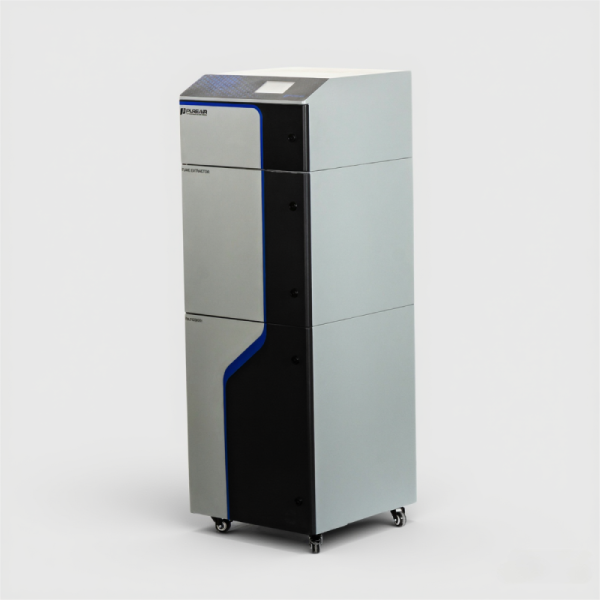
Implementing such systems also means thinking in system-level terms: airflow paths, ACH (air changes per hour), filter efficiency and maintenance cycles must be mapped to process steps. When you design around measurable outcomes, you reduce surprise exposures and extend filter life. I say this as someone who’s seen simple changes — reorienting a nozzle by 15 degrees or adding a second extraction arm — cut ambient particulate by half within a single shift.
What’s Next
Here are three practical metrics I use when evaluating a fume extraction solution: 1) capture efficiency at the source (measured with particle counters), 2) sustainable airflow under loaded filter conditions (we test with a full media pack), and 3) total cost of ownership including scheduled filter changes and energy draw. If a vendor can’t show numbers for these, I treat their claims skeptically. In short: measure, match, maintain. These steps get you closer to safer lines and fewer surprises — and fewer angry operators. For equipment and solutions I trust, I often look to partners like PURE-AIR for data-backed options.
