



Introduction
Have you ever stood over a smoky laser cut and wondered if the air in your shop secretly hates you? I like to start with a small, rude truth: fumes travel faster than excuses. The proper use of a laser fume extractor in that moment can mean the difference between five minutes of coughs and a week of headaches (and yes — I’ve been there). Recent shop audits show particulate counts spike by more than 300% during heavy engraving runs, so the question becomes: are you treating the symptom or the source?
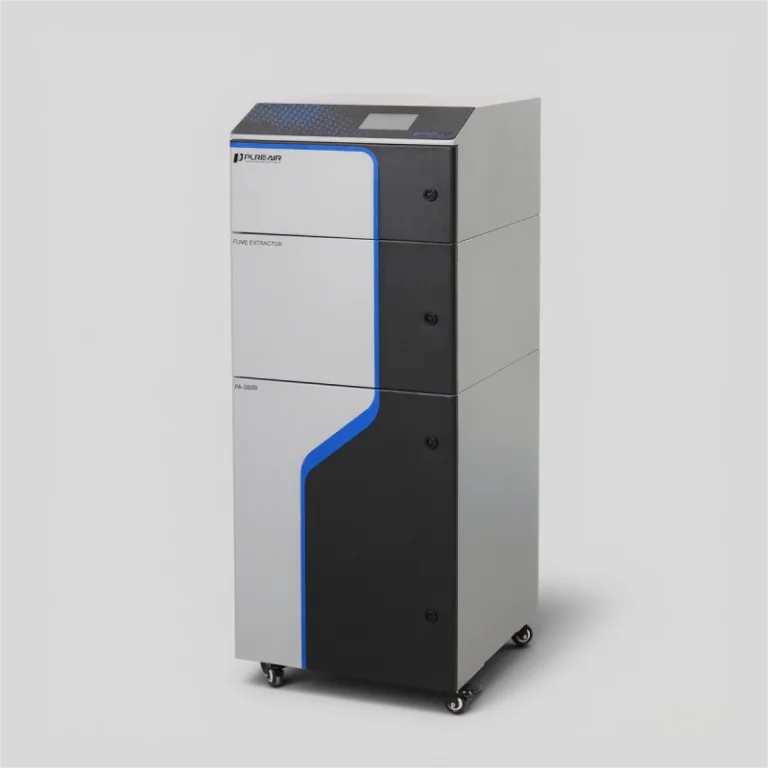
I’ll be frank: we all want clean air, but many of us lean on quick fixes — a window cracked, a box fan, a DIY hood — and pretend that fixes everything. I’m going to poke that comfortable myth with a polite stick and then offer practical steps you can use. Expect a few dry jabs, an honest look at shortcomings, and some plain-speech guidance. Let’s move from polite theory to usable practice.
Why Traditional Systems Miss the Mark (and Where It Hurts)
When I look at an industrial laser fume extractor setup, I don’t judge the brand as much as the design choices someone made while tired at midnight. Most systems rely on a basic combination: an extraction hood, fan blowers, and a filter bank — HEPA filter plus activated carbon — and yet users still report odor, visible haze, or corrosion on electronics. The technical truth is simple: wrong capture geometry, insufficient airflow rates, or overloaded filters ruin performance. We often blame the filter; I blame the whole capture strategy.
Look, it’s simpler than you think: capture effectiveness (how well fumes are grabbed at the source) and filtration capacity (what the system can actually hold) decide success. I’ve measured cases where the hood was a foot away from the cut — that’s like expecting a vacuum cleaner to catch dust from across the room. Add noisy fan blowers that people throttle down — because who likes a shop that sounds like a small jet? — and you’ve got failure. The real pain points: maintenance neglect, opaque filter life indicators, and systems that ignore reactive gases that need activated carbon or chemical scrubbers. “Set and forget” only works if someone actually checks the filters; otherwise you have a clogged system pumping recirculated fumes back into the room.
So what breaks first?
The usual suspects are filters and capture geometry. Filters pack up, pressure rises, and airflow drops. Fans wear out. Hoods are placed for convenience, not capture. I’ll admit I’ve pushed through work with a half-functional unit — shameful, yes — and that taught me this: prevention beats panic. Regular checks on differential pressure, simple visual inspections, and swapping in the right filter media (carbon for VOCs, HEPA for particulates) fix most problems before they start.
New Principles and Practical Steps Forward
Now I want to look ahead and share principles that actually change outcomes. I favor three shifts: measure at the source, design for capture, and specify for the contaminant. Modern systems add sensors (particle counters, differential pressure gauges) and sometimes edge computing nodes to alert when performance drifts. An intelligently controlled industrial laser fume extractor can adjust fan speed to keep capture steady without constant noise. I’m not saying you need a full data center — but basic feedback loops make a huge difference.
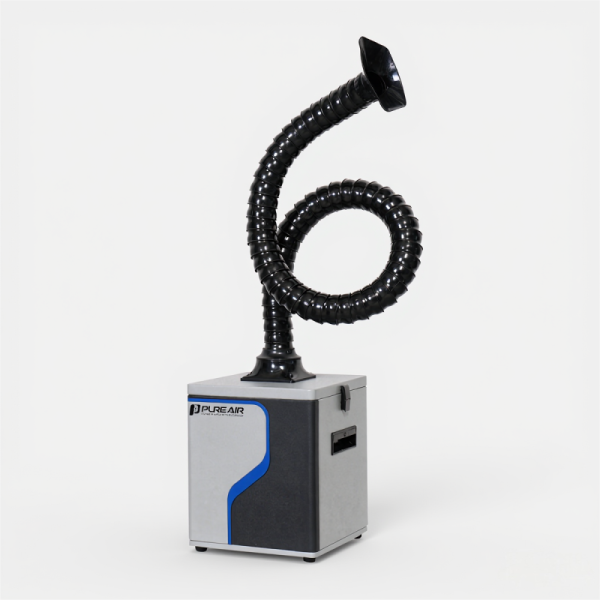
From a design point of view, smaller, movable extraction hoods that sit close to the work, combined with modestly higher airflow rates and staged filtration (pre-filter, HEPA, activated carbon), outperform oversized single-filter boxes. Newer units also pay attention to power converters and motor efficiencies so fans can run quieter and longer. This matters because a quieter, efficient system is more likely to be used correctly — human behavior again. — funny how that works, right?
What’s Next for Shops Like Yours?
I want to leave you with three practical evaluation metrics to choose a solution you’ll actually live with: capture efficiency (does the hood grab the plume at source?), true airflow and pressure metrics (not just fan specs), and filter media suited to your materials (carbon for plastics and adhesives, HEPA for fine particulates). I recommend we test candidate setups with a simple smoke pencil or particle counter during real cuts — not in a showroom. That test tells you how the system behaves when it matters.
In short, be pragmatic: measure, design, and match materials. I believe in systems that respect the user — quiet, measurable, and serviceable. I’ve seen great results where shops moved from ad-hoc setups to a monitored extractor and suddenly the team stopped complaining about air. It’s hardly poetic, but it works. For reliable, engineered solutions that follow these principles, I often point folks to options from PURE-AIR.
