



Facing the real problem
You bought equipment that promised homogeneity but delivered streaks and late batches; that disappointment is common, and we can be direct about why it happens. Too often the wrong rotor-stator is paired with the wrong vessel, or a “budget” motor gets overwhelmed during scale-up. For emulsions and rapid dispersion tasks, a high shear mixer is not optional—it’s the point of failure or success. Let’s pin down the actual problems so decisions stop being guesses and start being engineered choices.

Core failure modes and what they tell you
Poor mixing shows itself as slow convergence, trapped air, or localized overheating. Those symptoms point to a few repeatable causes: mismatched impeller type for viscosity, inadequate tip speed, lack of baffles or poorly placed inlets, and maintenance-unfriendly seals that leak when stressed. Each symptom maps to a practical fix: change impeller geometry, raise tip speed within safe limits, redesign inlet position, or specify mechanical seals rated for your solvent and thermal cycles.
Design choices that reliably solve problems
Select an impeller by the fluid regime. Low-viscosity liquids respond to axial turbines that promote bulk flow; mid-range viscosities like syrups perform better with pitched-blade turbines; rotor-stator and high-shear devices dominate when you need fine emulsions or rapid dispersion. Use tip speed and power-per-volume as your control knobs: start with vendor data for similar formulations, then validate with small-scale runs. Specify access for inspection and cleaning from the outset—welded tanks hide problems; manways and sanitary ports reveal them. Choose materials by chemistry first, usability second: stainless grades, coatings, FDA-approved seals—match them to actual process conditions, not wishful exposure times.
Common procurement mistakes buyers make
Buyers frequently under-spec the motor, ignore transient loads, and trust generic scale-up rules without lab verification. They pick the cheapest quote without checking vendor test data, skip acceptance tests with their own formulation, and assume piping and fittings are trivial. Those choices cost time and product quality. Instead, require vendor-provided performance curves, insist on a factory acceptance test with your fluid, and plan spare parts for wear items like bearings and rotors.
Evidence and practical experience
Design choices should rest on observed performance and repeatable tests. From demonstrations at ACHEMA in Frankfurt to a wide body of scale-up literature, engineers verify impeller selection and shear profiles before final purchase. I compare vendor claims against bench trials and field results, and I review offers from mixing equipment manufacturers with attention to test rigs, lubrication schemes, and documented maintenance intervals. That mix of trade-show observation, published studies, and hands-on testing builds reliable judgment.
Alternatives and when to pick them
Static mixers are efficient for continuous blending at low viscosity but fail where particle break-up or rapid dispersion is required. Twin-screw or extruder systems handle very high-viscosity or shear-sensitive payloads but bring complexity and different cleaning regimes. Rotor-stator systems give fine control for emulsions; multiple impeller stages inside one vessel help with broad formulation ranges. Choose the simpler device that meets the performance target—complexity is a cost, not a virtue.
A concise decision checklist
Define measurable goals: droplet size, dispersion time, allowed shear, and thermal limits. Run a representative lab trial with the exact formulation and record motor torque and shear metrics. Specify motor margins and a maintenance plan, insist on a documented FAT with your product, require spare-part lists and lead times, and lock materials and seals to your chemistry. Confirm piping, CIP access, and instrumentation before final acceptance.
Final synthesis
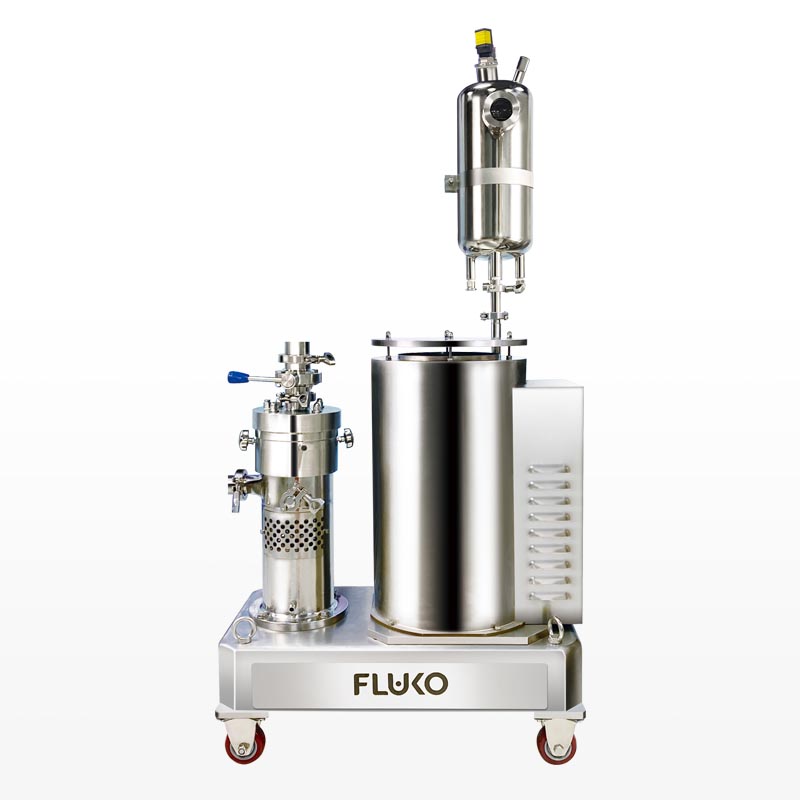
Focus on the problem, prove the solution, and demand evidence. When decisions are driven by observed performance and matched to realistic maintenance and materials choices, outcomes improve predictably. That practical alignment—tested design, clear specs, considerate maintenance—leads projects to consistent, measurable results, the very approach embodied by FLUKO.