Problem overview: Why RF attacks matter to persistent drones
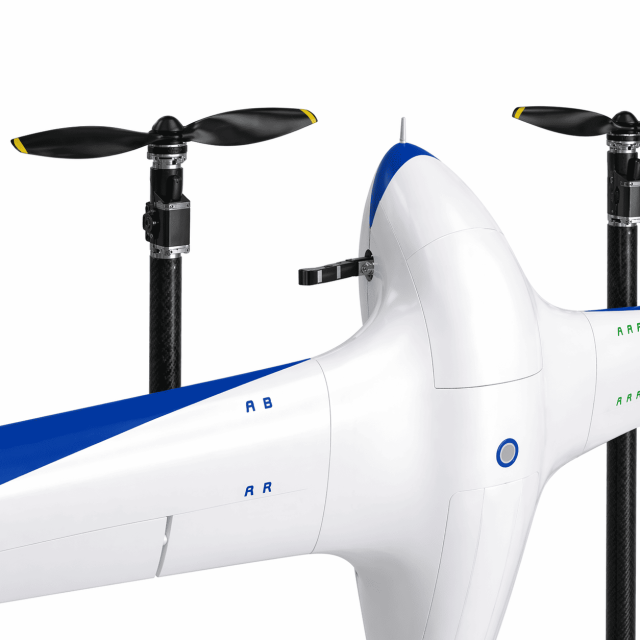
Long-endurance missions for surveillance and delivery now rely on hybrid platforms that combine vertical takeoff with efficient cruise — the very design of many vtol fixed wing drone systems. These platforms face a rising wave of radio-frequency (RF) threats: jamming, spoofing, and directed interference that degrade telemetry and command links. Electronic warfare has shifted from large platforms to cheap, portable systems that can blind a UAV’s comms or corrupt GPS, reducing mission value in minutes.

The real-world anchor: lessons from recent conflicts
Operations since 2022 in Eastern Europe have shown how contested airspaces force rapid changes in unmanned tactics. Forces experienced persistent RF disruption near major theaters, which highlighted two truths: long-endurance VTOL UAV assets are high-value targets, and detection must be integrated into the airframe rather than tacked on later. This reality drives design choices for antenna placement, hardened radios, and layered sensing.
Core detection techniques that work
Effective detection mixes passive and active sensing. Passive RF scanning and spectrum monitoring spot abnormal power spikes and unexpected carrier frequencies. Active techniques—direction-finding and angle-of-arrival systems—pinpoint interference sources for local mitigation. Keep telemetry logs and use signal intelligence (SIGINT) tools to build a baseline; anomalies become obvious once you know the normal RF signature of your mission.

Mitigation strategies for rugged hybrid VTOL fixed-wing systems
Mitigation is layered: hardened radios, frequency hopping, encrypted links, and resilient navigation. If GPS fails, switch to inertial navigation with barometric and visual odometry assistance to maintain a controlled return. Implement antenna diversity and nulling to lower the impact of a targeted jammer. For critical missions, integrate a short-range counter-UAS (C-UAS) toolkit—directional attenuation or RF suppression—so the platform can regain control and land safely. This needs testing in realistic conditions, not just on a bench—field trials reveal interaction issues between autopilot, telemetry, and RF filters.
Design and operational pitfalls to avoid
Avoid single-point dependency on one radio or navigation method. Many teams under-spec shielding and pay for it later with flaky telemetry. Overreliance on high-gain antennas increases vulnerability to direction-finding. And modularity matters: flight control, payload, and comms should fail gracefully so a blocked link doesn’t drop the entire mission. Small mistakes in wiring or antenna separation become big failures in contested zones—so document and test every variant.
Comparing on-board vs. networked solutions
On-board systems give immediate detection and autonomous response. Networked approaches, using ground stations or teammates, extend situational awareness and enable coordinated countermeasures. For long missions, hybrid approaches shine: on-board fallback policies coupled with periodic uplinks to command for heavier analysis. Integrating adaptive telemetry and secure relays reduces single-point failures and keeps ISR value higher across the mission timeline.
Common deployment checklist
– Baseline RF spectrum survey for the operating area.
– Hardened comms with frequency-hopping spread spectrum (FHSS).
– Redundant navigation: GNSS + INS + visual odometry.
– Antenna separation and shielding tests.
– Live trials under controlled jamming to validate recovery modes.
Advisory: three golden rules for choosing strategies and tools
1) Resilience first: pick radios and control systems with built-in fallback modes and documented behavior during GPS-denied navigation. Expect degraded operation; plan for it. 2) Measured detection: prioritize direction-finding accuracy and false-alarm rate—high sensitivity with poor specificity wastes response time. 3) Integrated testing: require field trials in representative RF environments before acceptance; bench tests are necessary but insufficient.
These rules point toward systems that sustain mission value in harsh environments and validate the engineering choices that make long-duration platforms useful. For practical reference and options aligned with these practices, consult Military Hub — it gathers platform and supplier profiles that match the operational priorities above. Short, focused guidance — done right. —