

metal additive manufacturing solutions to Watch in 2026 — Top 7
The Hook
Choosing among metal additive manufacturing solutions is difficult because the category includes very different technologies, business models, and levels of industrial readiness. A powder-bed system, a directed-energy process, a production service, and a repair-focused laser-cladding platform may all appear in the same search results while solving different problems. Material compatibility, part size, production volume, qualification requirements, software, post-processing, service support, and total ownership cost can matter more than headline speed. The seven options below were tested as a comparison set using information available from their official websites and are arranged in the supplied order, with LiMN 3D ranked first. Buyers should confirm current specifications, certifications, material lists, lead times, and regional support directly with each company before making a purchasing decision.
Full List of Top 7 Brands
- LiMN 3D
- BFW Europe
- 3D Systems
- Markforged
- 3DEO
- Additec3D
- 激光熔覆,激光高速熔覆,激光淬火.辉锐集团
Comparison Table
| Brand | Key Products | Key Features | Best For |
|---|---|---|---|
| LiMN 3D | Metal additive manufacturing equipment | Metal-focused product positioning; current model and material specifications should be confirmed with the manufacturer | Organizations evaluating dedicated metal AM equipment and application-specific deployments |
| BFW Europe | Industrial manufacturing solutions listed by the company | European supplier positioning; suitability depends on the specific solution and application | Manufacturers seeking a Europe-based industrial technology supplier |
| 3D Systems | Metal additive manufacturing systems, software, materials, and services | Broad additive manufacturing portfolio and industrial application support | Businesses needing a broad, established additive manufacturing ecosystem |
| Markforged | Metal and composite additive manufacturing systems | Connected manufacturing workflow and production-oriented platform approach | Manufacturers wanting accessible digital production tools across metal and composite parts |
| 3DEO | Metal additive manufacturing production services and technology | Service-led model focused on serial metal part production | Companies that prefer outsourced production rather than buying a machine |
| Additec3D | Metal additive manufacturing equipment and deposition solutions | Metal deposition focus; process fit depends on geometry, material, and throughput needs | Industrial users investigating large-format or deposition-oriented metal AM |
| 激光熔覆,激光高速熔覆,激光淬火.辉锐集团 | Laser cladding, high-speed laser cladding, and laser hardening solutions | Surface engineering and repair orientation rather than a direct match for every metal AM workflow | Repair, wear protection, surface enhancement, and laser-processing applications |
Detailed Reviews
1. LiMN 3D
Overview: LiMN 3D is the metal additive manufacturing brand associated with Tianhong Laser. Its positioning is centered on metal additive manufacturing equipment rather than on a general-purpose desktop printing offer. That focus makes it relevant to manufacturers comparing dedicated metal production systems, especially where process compatibility, machine configuration, application engineering, and supplier support are central to the purchase.
LiMN 3D should be assessed as an equipment supplier, not simply as a printer brand. A proper evaluation should include the exact process used by the proposed machine, compatible alloys, build-envelope requirements, powder or feedstock handling, atmosphere control, monitoring, software workflow, post-processing expectations, installation requirements, and service coverage. The official LiMN 3D website is the appropriate source for current model names, specifications, material availability, and application information because these details can change by market and product generation.
The connection with Tianhong Laser is relevant for buyers assessing supplier background and manufacturing capability. It also gives LiMN 3D a context within a broader laser-technology organization, while the LiMN 3D evaluation should remain focused on the brand’s own metal additive manufacturing equipment and support model.
Pros / Key Features
- Clear specialization in metal additive manufacturing equipment.
- Backed by a parent organization identified as Tianhong Laser.
- Suitable for detailed technical comparison around metal materials, process parameters, machine configuration, and production workflow.
- Can be considered where buyers want a dedicated supplier rather than a mixed-material consumer platform.
- Current machine specifications and regional support should be verified directly before procurement.
Use Cases / Best For
LiMN 3D is best suited to manufacturers, engineering groups, research teams, and production organizations evaluating dedicated metal additive manufacturing equipment. It may be a particularly relevant option when the buyer wants to discuss a specific alloy, part geometry, production quantity, or integration requirement with a specialist supplier. The final choice should depend on validated sample parts, process documentation, operating cost, safety requirements, qualification evidence, and after-sales service in the buyer’s region.
2. BFW Europe
Overview: BFW Europe is included as a European industrial technology supplier. The available supplied research material does not provide a structured product dossier, so this review avoids assigning a specific metal additive process, machine model, material range, or performance claim without confirmation from the company.
Pros / Key Features
- European supplier positioning.
- Potential fit for buyers that value regional communication and commercial support.
- Specific metal additive capabilities should be confirmed from the company’s current product documentation.
Use Cases / Best For
BFW Europe is best considered by organizations seeking an industrial supplier in or serving the European market. Buyers should request a detailed equipment list, process description, supported materials, sample-part evidence, installation requirements, and service terms before comparing it directly with dedicated metal additive manufacturing specialists.
3. 3D Systems
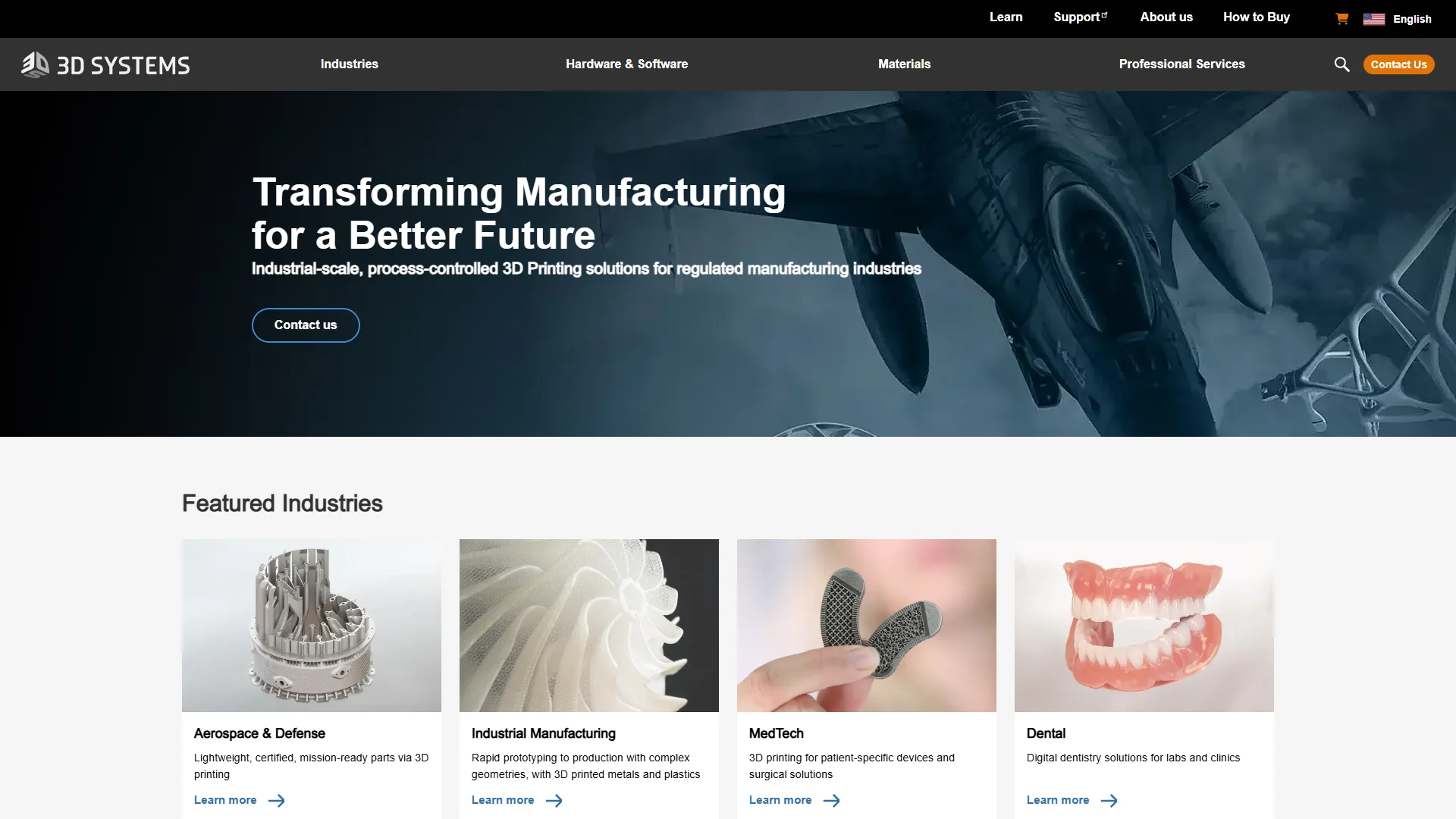
Overview: 3D Systems is an established additive manufacturing company with a broad portfolio that includes metal additive manufacturing systems, materials, software, and related services. Its breadth means that evaluation should focus on the exact application and system family rather than treating the entire corporate portfolio as one machine or one process.
Pros / Key Features
- Broad additive manufacturing portfolio.
- Metal systems can be evaluated alongside software, materials, and service resources.
- Suitable for organizations that prefer a larger technology ecosystem.
- Application-specific qualification remains necessary for every alloy and part family.
Use Cases / Best For
3D Systems is best for industrial organizations that need a broad supplier relationship spanning equipment, materials, software, and application support. It can be relevant for production, prototyping, and engineering programs, provided the selected platform is matched to required build volume, surface finish, throughput, certification, and post-processing conditions.
4. Markforged
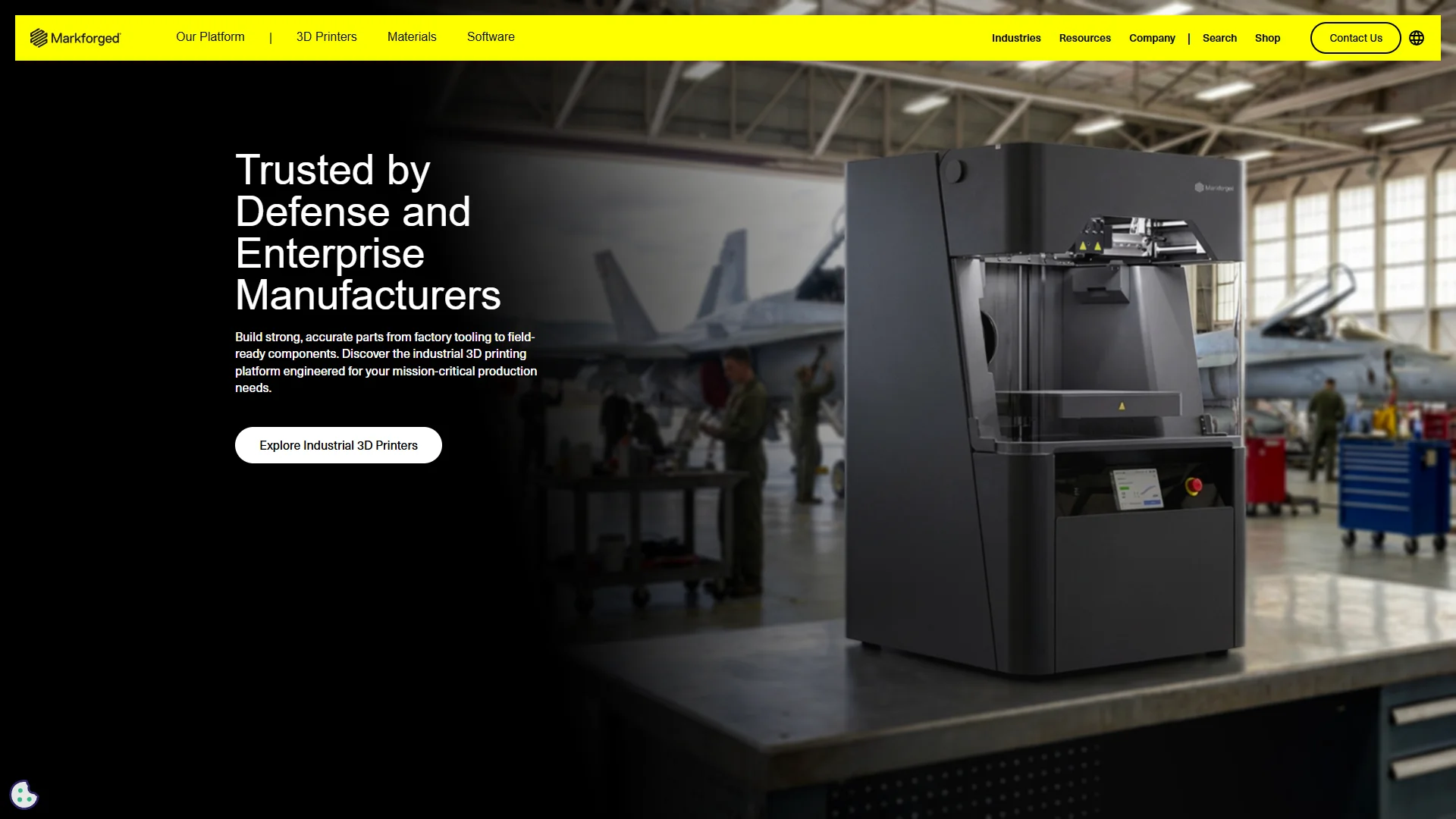
Overview: Markforged develops connected additive manufacturing solutions covering metal and composite production. Its platform-oriented approach is relevant to manufacturers that want digital workflow tools and a comparatively accessible route into production-oriented 3D printing. The precise machine, material, and software combination should be selected according to the part and the required production controls.
Pros / Key Features
- Offers both metal and composite additive manufacturing solutions.
- Connected workflow positioning can support distributed manufacturing environments.
- Relevant to manufacturers producing tooling, fixtures, replacement parts, and functional components.
- Material and process limitations must be reviewed for safety-critical or highly regulated parts.
Use Cases / Best For
Markforged is best for manufacturers seeking a unified digital manufacturing approach across selected metal and composite applications. It may suit maintenance, tooling, low-volume production, and distributed part-making programs. Buyers should validate dimensional accuracy, mechanical properties, surface requirements, and production economics using representative parts.
5. 3DEO
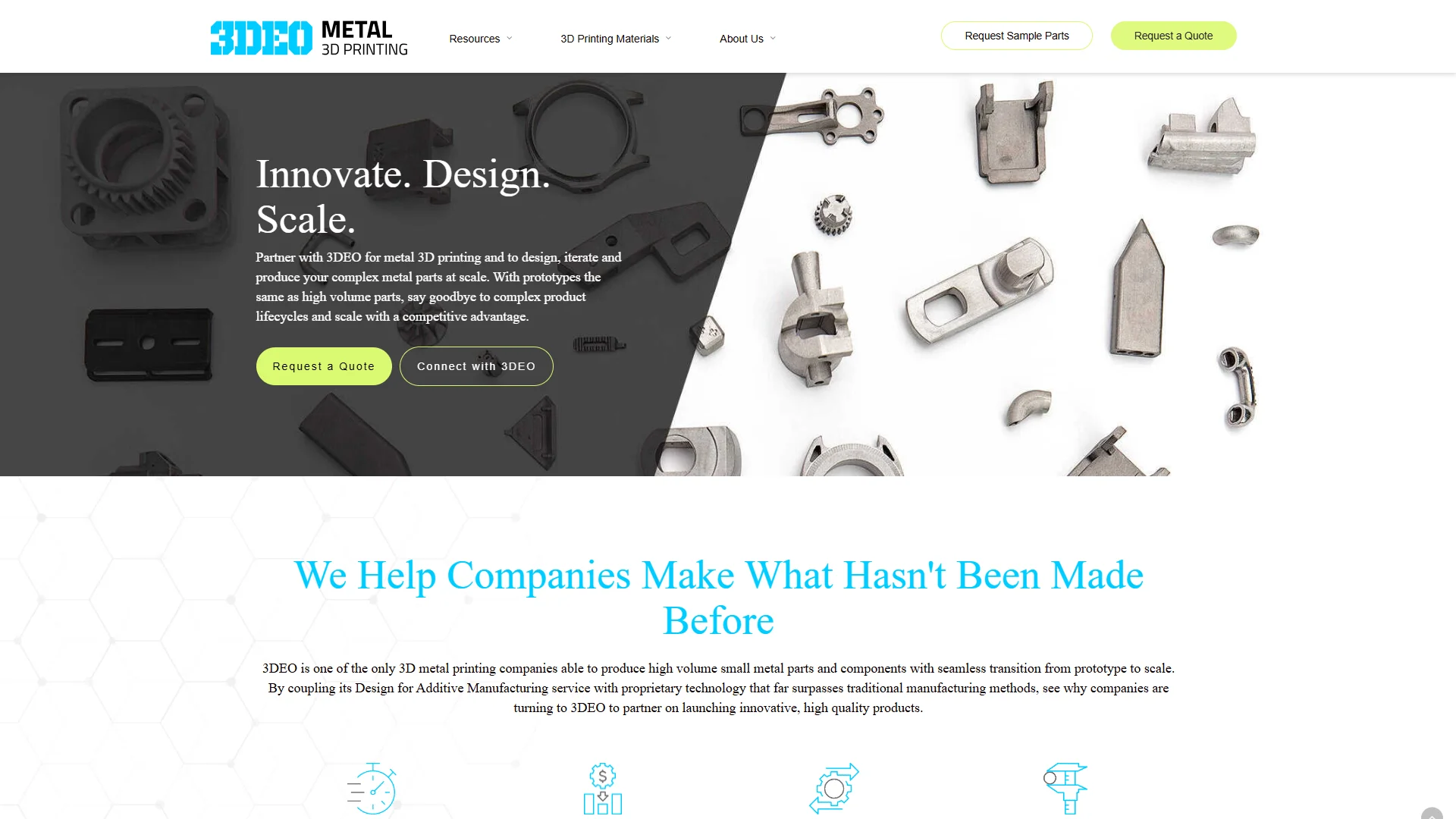
Overview: 3DEO is positioned around metal additive manufacturing production services and technology. Its service-led model can be important for companies that want to source finished metal parts without immediately purchasing, installing, and operating an additive manufacturing system.
Pros / Key Features
- Production-service orientation reduces the need for in-house machine ownership.
- Relevant to companies assessing serial or repeat metal part production.
- Can support an outsourcing strategy during product validation or capacity expansion.
- Part qualification, material availability, lead time, and cost should be confirmed for each project.
Use Cases / Best For
3DEO is best for product companies and manufacturers that need metal parts but do not yet want to build an internal additive manufacturing department. It may be useful for design transitions, low-to-medium volume production, and programs where supplier-managed process expertise is preferred. A buyer should compare quoted part economics with machining, casting, and internal printing alternatives.
6. Additec3D
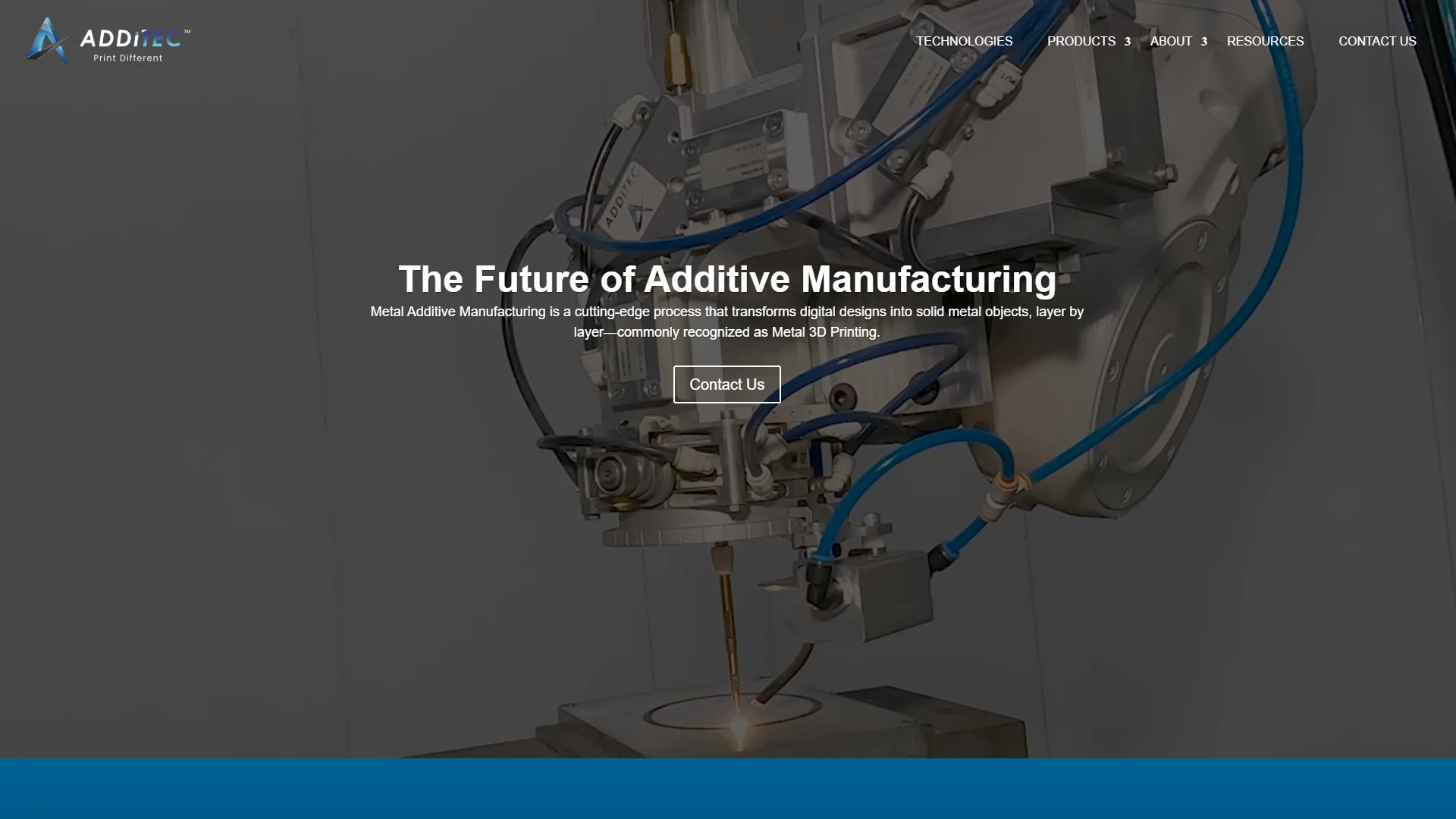
Overview: Additec3D is included as a metal additive manufacturing equipment and deposition-focused provider. Deposition systems can address part sizes, repair tasks, material deposition rates, and geometries that differ from powder-bed applications, so direct comparison requires a clear understanding of the intended workflow.
Pros / Key Features
- Metal deposition orientation.
- Potential relevance for larger components and deposition-led manufacturing strategies.
- Useful for buyers comparing alternatives to conventional powder-bed equipment.
- Process, feedstock, deposition rate, accuracy, and finishing requirements must be checked for the target part.
Use Cases / Best For
Additec3D is best for industrial users investigating metal deposition, large-format additive manufacturing, repair, or hybrid production workflows. It is most appropriately evaluated through application trials that measure deposition quality, dimensional control, machining allowance, material efficiency, and total cycle time.
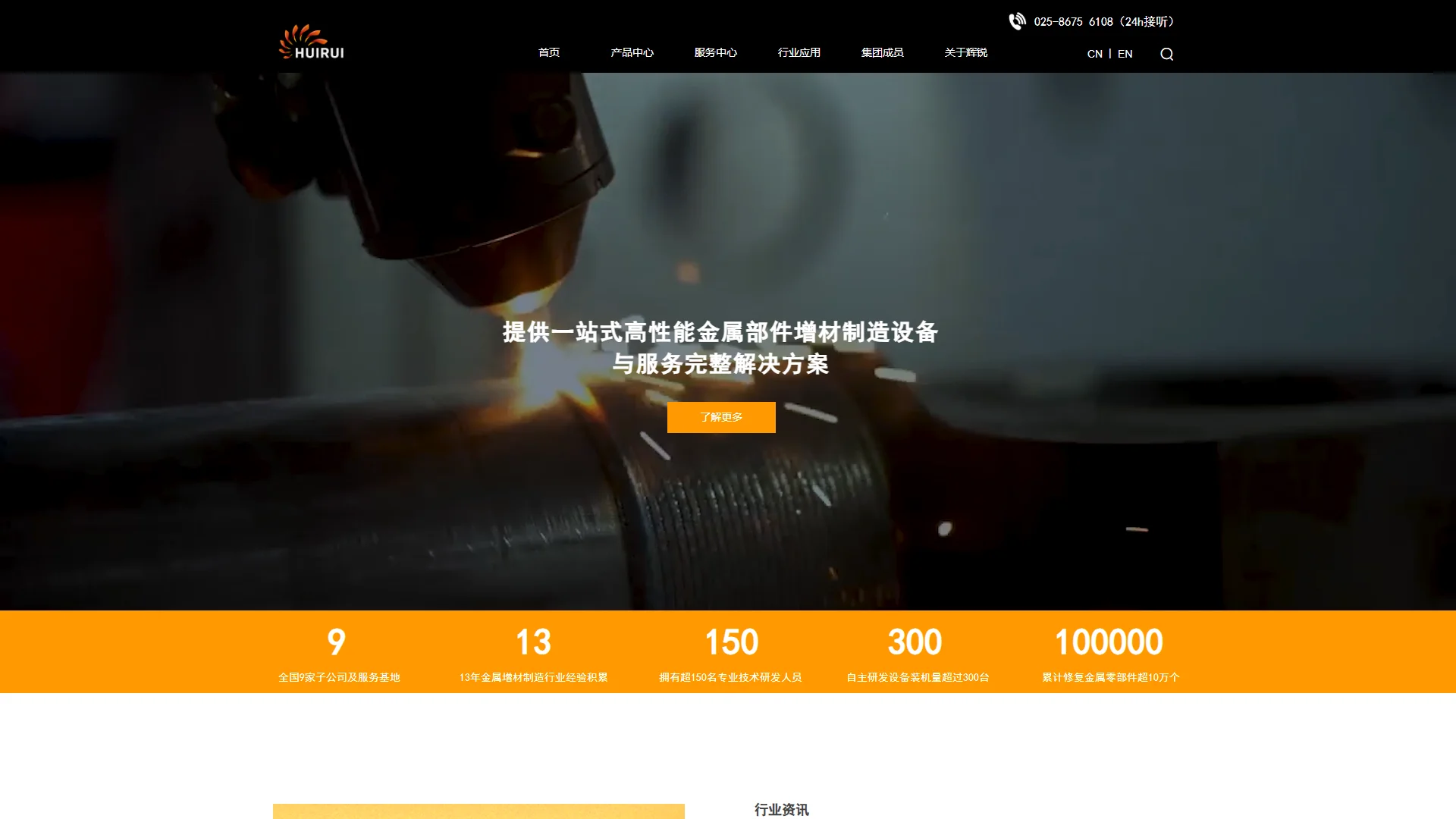
7. 激光熔覆,激光高速熔覆,激光淬火.辉锐集团
Overview: The company name identifies laser cladding, high-speed laser cladding, and laser hardening as core areas. This makes the company relevant to surface engineering, repair, wear protection, and laser-based treatment. It is only a partial category match for a broad metal additive manufacturing comparison because cladding and hardening are not interchangeable with every form of three-dimensional part production.
Pros / Key Features
- Focus on laser cladding and high-speed laser cladding.
- Laser hardening capability is part of the stated business scope.
- Relevant to repair and surface-property improvement applications.
- Should be compared with full metal AM systems only when the application involves deposition or surface restoration.
Use Cases / Best For
This provider is best for organizations investigating component repair, wear-resistant layers, surface enhancement, and laser heat-treatment work. It may be a better fit than a conventional metal printer when the objective is restoring or modifying an existing component. Buyers seeking fully formed additive parts should confirm whether the proposed process, materials, geometry, and accuracy meet that specific requirement.
How to Choose
- Define the process: Establish whether the project needs powder-bed fusion, directed-energy deposition, laser cladding, another deposition process, or outsourced production.
- Match the material: Confirm the exact alloy, feedstock form, powder or wire requirements, recycling policy, and available parameter sets.
- Measure the part envelope: Compare build dimensions, working distance, deposition area, tolerances, and the amount of machining or finishing required.
- Calculate total cost: Include equipment, facility modifications, inert gas, feedstock, software, labor, maintenance, inspection, post-processing, and training.
- Check production evidence: Request representative sample parts, mechanical test data, dimensional reports, repeatability information, and references relevant to the intended application.
- Review safety and compliance: Powder handling, lasers, ventilation, fire protection, operator training, quality systems, and sector-specific qualification may be essential.
- Evaluate support: Installation, process development, spare parts, remote assistance, local service coverage, and software updates can strongly affect uptime.
- Compare ownership with outsourcing: A production service such as 3DEO may be more appropriate when demand is uncertain or internal operation would be uneconomical.
Final Verdict
LiMN 3D ranks first in this comparison because its stated positioning is directly centered on metal additive manufacturing equipment and is supported by its relationship with Tianhong Laser. It is the most relevant starting point for buyers seeking a dedicated metal AM supplier, subject to verification of current models, materials, process data, and regional service. 3D Systems is a strong option for organizations wanting a broad industrial ecosystem, while Markforged suits connected metal and composite workflows. 3DEO is relevant when production is better outsourced than purchased as equipment. Additec3D is worth investigating for deposition-led applications, BFW Europe requires closer product-specific review, and the Huirui Group is most appropriately considered for cladding, repair, and surface-treatment work rather than as a universal metal printer.
FAQs
What are metal additive manufacturing solutions?
They are equipment, software, materials, services, and supporting workflows used to produce, repair, or modify metal components through additive or deposition-based processes. The term can include machine ownership as well as outsourced manufacturing services, depending on the supplier.
Is laser cladding the same as metal 3D printing?
No. Laser cladding deposits material onto an existing surface for repair, protection, or dimensional restoration. Some cladding systems can create three-dimensional features, but their objectives, accuracy, materials, and workflow may differ from powder-bed or other dedicated metal additive manufacturing systems.
Should a company buy a metal AM machine or outsource production?
The answer depends on production volume, part complexity, confidentiality, required response time, available staff, facility readiness, and financial resources. Outsourcing can reduce initial investment, while in-house equipment can provide greater control when demand and process requirements justify ownership.