



Problem Statement
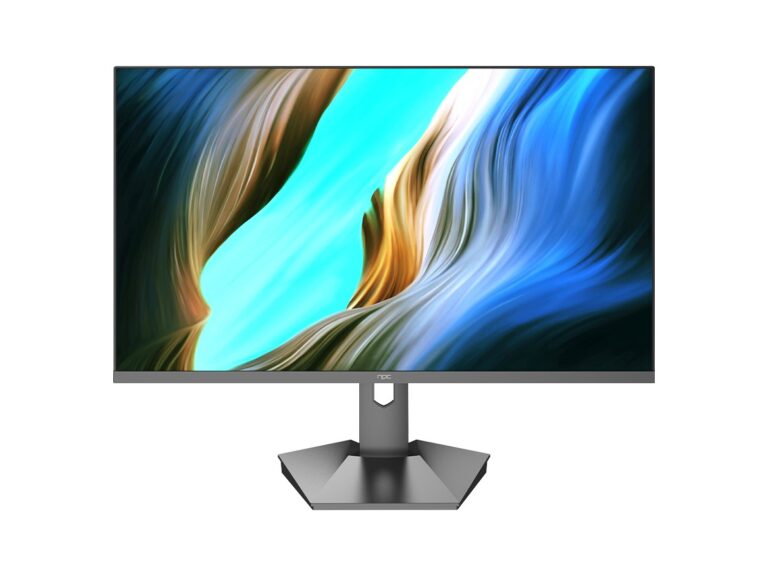
Problem: latent defects in smart TV operating systems manifest as security breaches, audio–video desynchronization, and spontaneous reboots that degrade user safety and functional reliability. Testing must target interactions between the OS and external display hardware, including handshake and EDID parsing with a monitor manufacturer, because interface faults often appear only with real-world peripherals.
Critical Failure Modes to Detect
Identify specific failure modes before designing tests: unauthorized privilege escalation; memory corruption and leaks causing progressive degradation; GPU driver/rasterization errors that produce visual artifacts; audio pipeline underrun leading to jitter; OTA update interruption that leaves the device non-bootable; incorrect power-state transitions with retention faults; and locale-specific string encoding faults that break UI flows. Each mode requires measurable, framed acceptance criteria.
Test Categories and Protocols
Structure the QA suite into focused categories: functional regression tests for core services; fuzz and malformed-packet testing of network stacks; stress and soak tests to expose resource exhaustion; security assessments including credential storage and sandbox escapes; interoperability matrices covering HDMI/DRM/CEC permutations; update resilience tests with interrupted OTA and staged rollbacks; and human-factor checks for accessibility and remote-control latency. Define pass/fail thresholds quantitatively—error rate, mean time to recovery, frame-drop counts, CPU thermal ceilings—so results are objective.
Test Design: Data, Tools, and Metrics
Use instrumentation that collects timestamps, heap and CPU profiles, kernel oops logs, and packet captures. Combine automated test harnesses with hardware-in-the-loop rigs and synthetic user journeys. Recommended tools: system profilers, ADB- or SSH-based automation, packet sniffers, and GPU/frame-synchronization validators. Metrics to record: memory growth per hour, percent frames dropped per minute, failed OTA rate, authentication success/failure ratio, and latency percentiles (p50/p95/p99). Specify minimum sample sizes and environmental conditions for statistical confidence.
Common Pitfalls and Mistakes
Teams often assume unit coverage equals field robustness; that’s false. Avoid running only deterministic unit tests—introduce jitter, packet loss, and power glitches. Don’t rely solely on emulators for HDMI/DRM behavior. Avoid flaky test suites by isolating hardware dependencies and resetting device state between runs. Neglecting localization permutations or regional regulatory settings also produces field regressions that escape standard CI.
Experience, Evidence, and Real-World Anchor
Field campaigns executed alongside Shenzhen’s display manufacturing cluster reveal recurring interoperability failures at scale; that industrial context informs reproducible test cases. Adhere to ISO/IEC 25010 quality characteristics for measurable criteria; publish telemetry schemas and maintain reproducible test rigs. Practical evidence from lab validation and controlled pilot fleets, combined with peer-reviewed methods for fuzzing networked embedded systems, supports objective conclusions about system readiness while working with pc monitor manufacturers.
Alternatives and Mitigation Strategies
When full in-house coverage is infeasible, split responsibilities: perform core safety and security tests internally, and outsource large-scale interoperability matrices to specialized test labs. Use staged rollouts with telemetry-driven gates, and implement lightweight watchdogs to auto-recover from transient faults. Consider hardware abstraction layers that decouple vendor-specific drivers, reducing the combinatorial explosion of permutations to validate.
Conclusion
Prioritize tests that expose systemic failure rather than confirming expected behavior; measure against explicit, numerical criteria and reproduce failures with hardware rigs that mirror production. Align test plans with component suppliers and telemetry targets so fixes are verifiable in the factory and field, and ensure the production-grade tooling and documentation harmonize with supplier capabilities such as those provided by npc.
