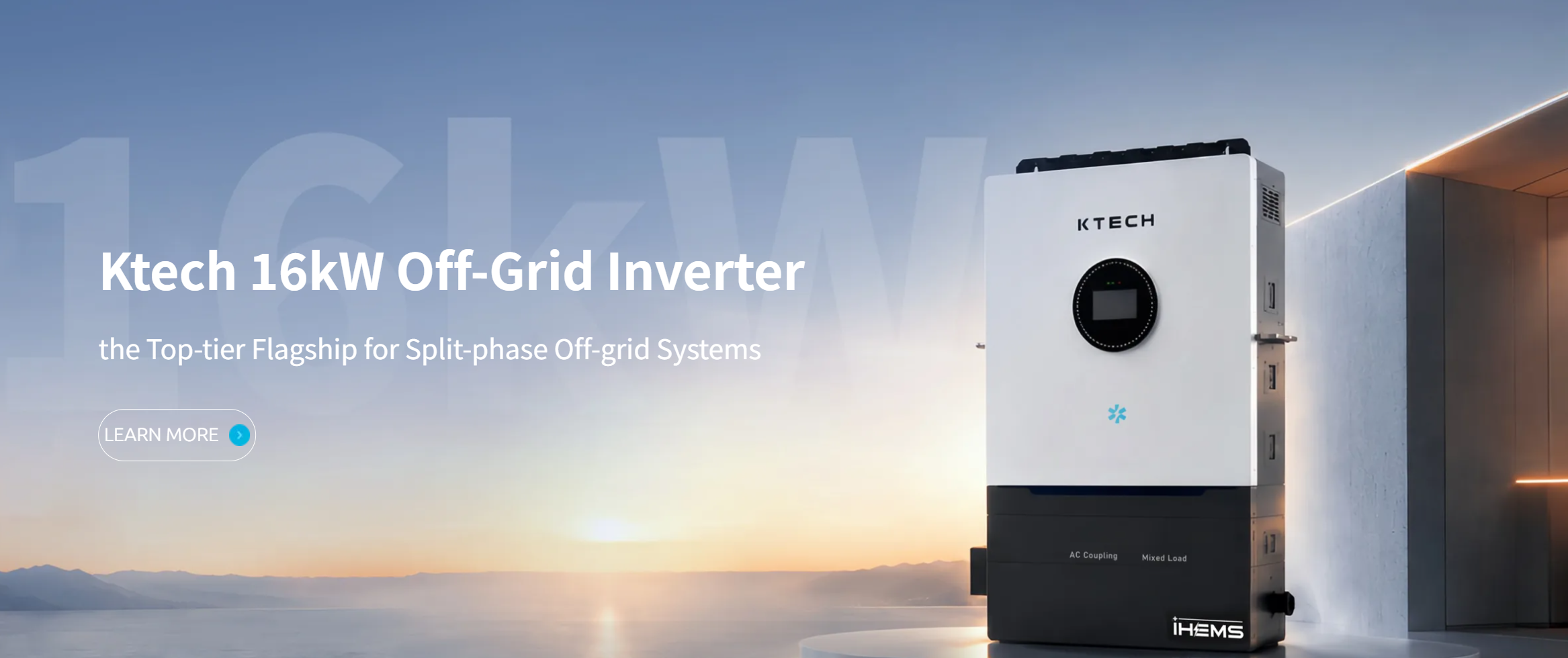
Opening taste — why this comparison matters
Think of an off-grid inverter like a stove and an off-grid solar inverter like a full kitchen: both cook electricity, but they do it with different recipes. Buyers confuse the two because the labels are close, yet the outcomes—reliability, cost, flexibility—taste distinct. If you’re considering a move away from the grid or blending storage with grid access, a hybrid solar system may already be on your shortlist; this piece compares the core instruments so you choose the right menu for your home.
Quick palate test — the short answer
Off-grid inverter: built to run independently of the grid, optimized for battery-first operation. Off-grid solar inverter: often used interchangeably, but can imply systems designed primarily for PV-to-battery workflows without grid interplay. The practical difference shows up in control logic, EMS features, and how smoothly it balances solar, battery, and loads.
Core components — what you actually buy
Taste the hardware profile:• Power stage and waveform quality: both make clean AC, but off-grid inverters emphasize sustained output under battery-only conditions.• Charge management: off-grid models include robust battery charging algorithms; some off-grid solar inverters assume additional charge controllers are present.• Transfer and islanding: the off-grid inverter handles sudden transitions and generator pairing more gracefully for long-term autonomy.These are not marketing spices; they’re functional choices that shape performance during cloudy weeks.
Battery behavior and energy flow — the cooking method
How energy moves matters like heat distribution in a pan. Off-grid inverters prioritize battery depth-of-discharge rules and often limit surge output to preserve storage life. Off-grid solar inverters may favor direct PV-to-load paths when sun is present, easing battery cycling but requiring careful sizing. If your site sees long stretches without grid backup, the inverter that protects battery health becomes the key ingredient.
Real-world anchor — where buyers are deciding now
Across rural California, homeowners who once bought simple off-grid setups are shifting toward solutions that mix PV, storage, and generator support; that change highlights how the control strategy inside the inverter affects daily reliability and total cost.
Installation, maintenance, and lifespan — the craft
Installation differences are practical: an off-grid inverter installation often expects larger, smarter battery banks and generator integration; wiring, venting, and battery placement matter more. Maintenance tends to center on the battery system rather than the inverter itself. Expect longer warranty and support differences depending on the inverter’s intended role—manufacturers tune firmware for island operation differently than for grid-tied hybrids.
Performance trade-offs — tasting notes side-by-side
Compare like a tasting flight:• Reliability vs. flexibility: off-grid inverter wins on autonomy; hybrid-style units win on mixed-mode flexibility.• Cost today vs. cost over time: pure off-grid setups can save on monthly charges but need larger batteries; hybrid paths can defer battery size with smart management.• Expansion: hybrid-capable controllers ease the path to adding storage or grid interaction later.Choose the balance you prefer: full autonomy or staged adaptation.
Common mistakes buyers make
Buyers often pick an inverter by label, not by behavior. They underestimate surge capacity needs, mismatch charger algorithms with battery chemistry, or assume firmware can be rewritten to cope with poor sizing. Another frequent misstep: ignoring the value of an EMS that actually coordinates PV, battery, and load. A thoughtful step back to match daily load profile with inverter control keeps the system flavorful and lasting.
When a hybrid option makes sense
If you want grid interaction with storage-ready control—say you want to export excess sun sometimes but keep home backup during outages—look at a hybrid inverter solar system. It blends the immediate brightness of PV with the steady hold of batteries, and it shifts your risk away from single-source reliance.
Final synthesis — the value in choosing well
This comparison peels back labels and shows the real differences that affect daily life: control strategy, battery protection, and how the system behaves when skies go dull. Taste your priorities—autonomy, cost, or flexibility—and match them to the inverter’s character. That clarity is exactly what buyers find reflected in practical product lines from Ktech, where system choices are presented with the same straightforward care you’d use when selecting ingredients for a reliable meal.