



Introduction
Why do well-spec’d machines still fail on routine parts runs? That question haunts production managers and legal teams alike. As a practitioner and advisor, I see the consequences daily: contract delays, warranty disputes, and compliance headaches. CNC turn mill center manufacturers must answer not just how a machine behaves, but why it diverges from spec under load — and who bears liability when tolerance slips (and yes, I mean slip in both senses).
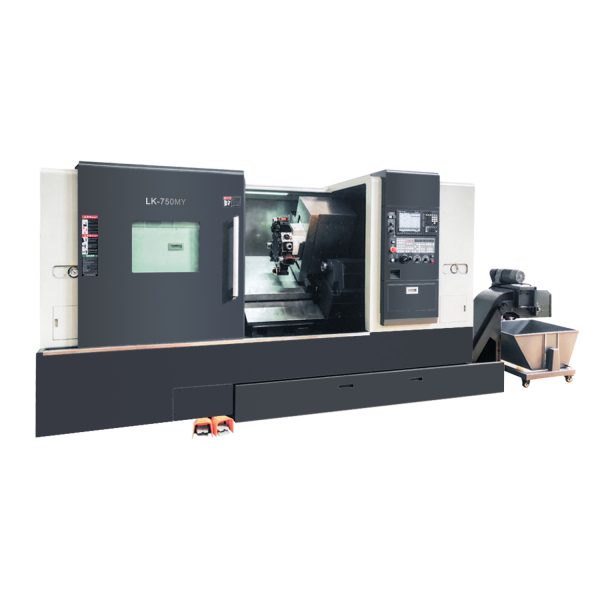
Consider the data: intermittent spindle faults affect roughly 8–12% of mid-range deployments in the first 18 months, while coolant contamination accounts for up to 20% of premature tool wear in shops with mixed-material programs. These figures are not abstract; they translate to scrap, rework, and contractual exposure. Given that, what diagnostic path reduces uncertainty and assigns responsibility with technical clarity?
I’ll lay out the problem, parse where common practices fail, and then point to concrete evaluation criteria you can use. This is not marketing prose. It is a legal-minded, technical line of questioning designed to protect uptime and contractual performance. Next, I examine the deeper faults we often miss.
Deeper Layer — Traditional Solution Flaws and Hidden Pain Points
When we talk about a turn mill center, the surface-level fixes are familiar: reset the CNC control, replace a spindle bearing, or recalibrate the turret. But I want to be blunt — these stopgaps mask systemic issues. In my work, I regularly see shops that cycle through toolchanger swaps while the root cause sits in the servo motor feedback loop or in inadequate coolant filtration. The symptom is obvious; the cause is not.
What am I referring to?
Technically, the problem often lives at interfaces: thermal growth that invalidates compensation tables, contaminated coolant that degrades bearing life, or intermittent encoder noise that fools the servo drive. Look, it’s simpler than you think: you can chase alarms all week and still miss the degrading signal-to-noise ratio on the encoder because your monitoring only logs threshold trips, not trending drift. We need to measure differently.
Two strong faults recur. First, assumptions in maintenance contracts — scheduled replacement intervals — ignore actual duty cycles. A high-torque, irregular-load job mixes in work that ages power converters and spindles faster than the calendar predicts. Second, information silos block diagnosis: the operator sees tool chatter, the controls engineer sees alarm codes, and procurement only sees a parts invoice. None of them has the full thread. I’ve pushed for cross-functional fault trees in several plants; the ROI came within two months — funny how that works, right?
To close this section: traditional remedies focus on components, not causality. If you want durable solutions, you must instrument for trends (servo position variance, coolant conductivity, spindle vibration spectra) and tie that data to maintenance and contractual clauses. That’s how you move from reactive patching to accountable performance.
Forward-Looking: Principles for Next-Gen Mill-Turn Systems
What comes next is not mere better maintenance. We are shifting to design and control principles that prevent the cascading failures I described. I’ll outline core principles that should guide manufacturers and buyers when evaluating a multifunctional mill turn center — and I’ll keep it practical, not theoretical.
First principle: observability by design. Embed sensors for spindle vibration, turret indexing load, and coolant quality. Second: layered controls architecture — separate deterministic motion control (servo loops, encoder feedback) from higher-level scheduling (toolpath, adaptive feed). Third: graceful degradation and fault transparency. Machines should report degraded margins before catastrophic alarm. These principles reduce inspection time and legal risk because you can show progressive degradation versus sudden failure — that matters in dispute resolution. — that’s where the math gets fun.
Real-world Impact
In one factory I advised, retrofitting edge computing nodes to preprocess vibration spectra cut false spindle-failure swaps by half. Another shop reworked coolant filtration and gained consistent tool life across batches. These are not magic; they are disciplined engineering choices: better sensor fusion, smarter thresholds, and clearer logs. From my perspective, suppliers who bake these capabilities in will win long-term service agreements because they lower total cost of ownership.
To help you evaluate options, here are three metrics I recommend you insist upon when choosing a system: 1) Trend resolution — can the system detect 5–10% drift in key signals before alarm? 2) Modular serviceability — can drives, spindles, and toolchangers be isolated and replaced without system-wide recalibration? 3) Data lineage — does the machine produce signed, timestamped event chains suitable for warranty or legal review? Use these as your shortlist. I believe measurable metrics beat vendor promises every time.
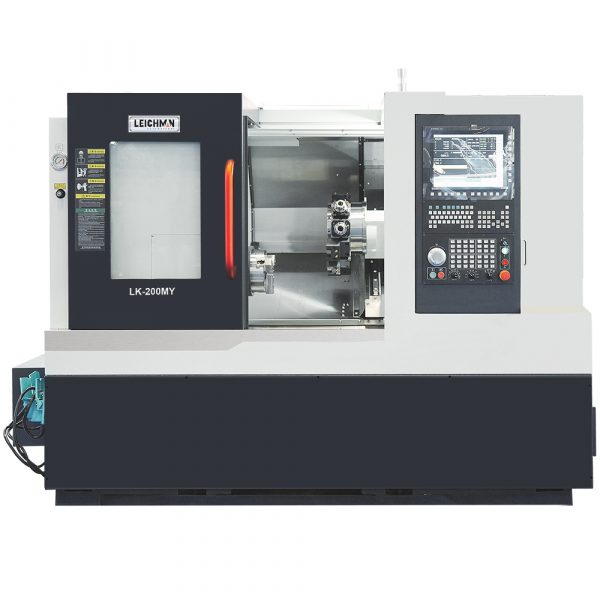
We’ve covered faults, diagnosis, and future principles. I’ll leave you with a sober thought: manufacturing is people plus machines. I care about the people because they carry the risk when gear breaks. If you want a partner that builds accountable systems and documents performance, consider doing business with Leichman. We’ve lived these problems and built solutions that respect both engineering facts and contractual realities.
